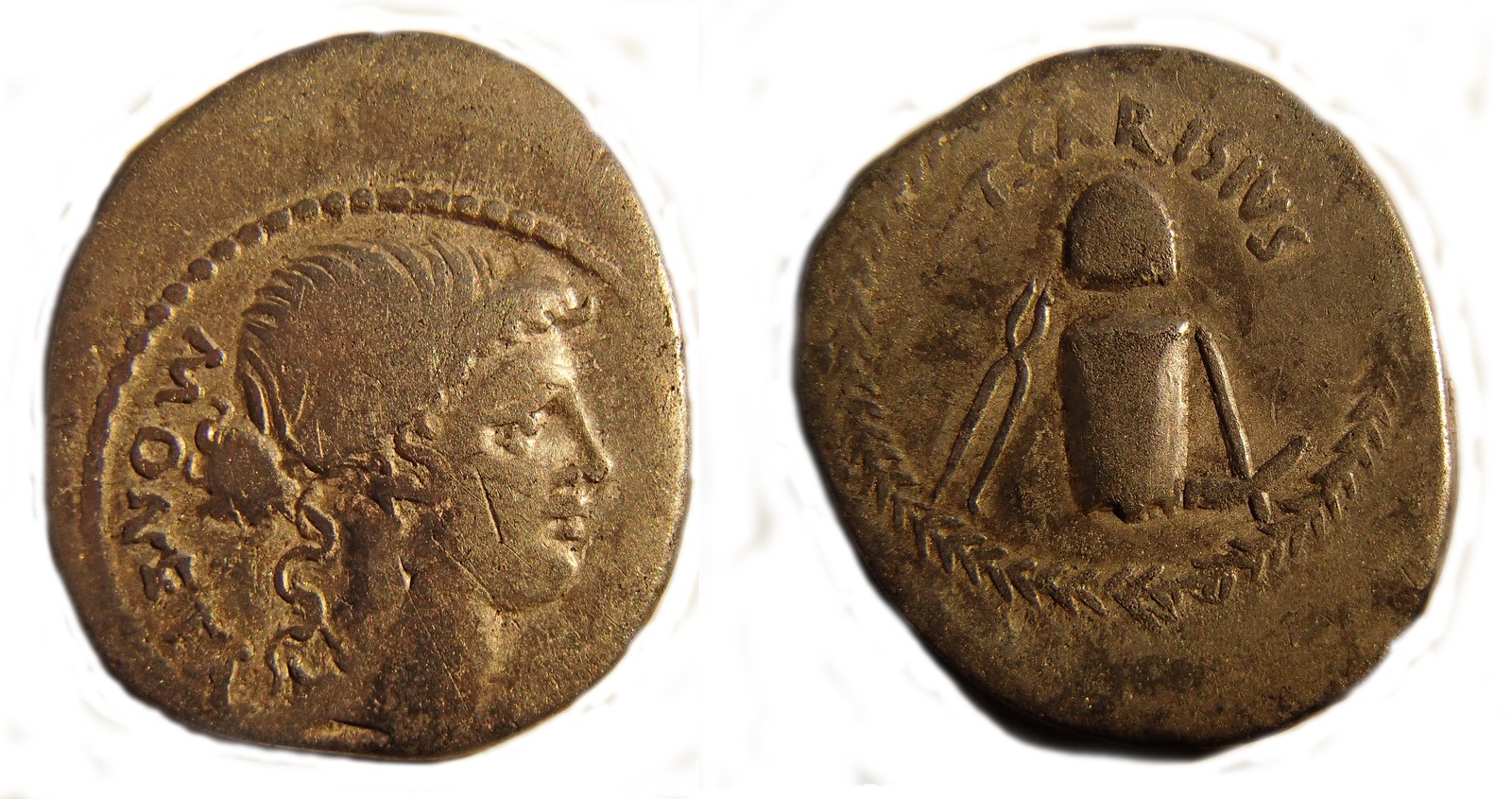
A silver denarius, struck by a Roman army far from Rome around 43 or 42 BC, shows on one side a mature, lean-faced man in profile, with the legend BRVT IMP and the name of the moneyer, L. PLAET. CEST. Turn it over and the design is startlingly spare: a cap in the middle, a dagger on either side, and below them three letters and a word, EID MAR.
The cap is the pileus, the soft felt hat given to a slave on the day he was freed. The daggers need little explanation once you read the legend. The Ides of March, 15 March 44 BC, is the day Caesar fell in the Senate house, and Brutus, who stands in profile on the other side, chose to put the date itself on his money. Few coins in the ancient world are so direct about what they remember.
What I find wonderful is the boldness of the idea. Brutus could have shown a god, a temple, a famous ancestor. Instead he used a handful of simple shapes that any soldier, whatever his language, could read at a glance: here is the instrument, here is the symbol of liberty, here is the day. The coin was struck to pay troops in the east, in the field, by a military mint that moved with the army, which is why its style has a lively, slightly improvised energy.
There is also a charming puzzle in the portrait. Brutus appears on the obverse as a living man, years after Caesar had broken that taboo, a detail that sits oddly beside a coin celebrating the end of one man's rule. Historians still discuss how deliberate that irony was, and whether it was an irony at all to the people who made it. The two daggers are usually read as a nod to Brutus and Cassius, though scholars do not all agree that this was the intended meaning.
A coin like this leaves me with a pleasant question rather than an answer: when a man chooses the single image he wants carried across a continent in thousands of pockets, what does it tell us that he picked a cap instead of a crown?