A denarius was worth four sestertii, or sixteen asses, in the early imperial system. That is a useful starting point, not a conversion rule for every century of Roman history.
The Roman money system at a glance
The table describes the principal imperial denominations from Augustus onward, before the third-century breakdown. The ratios are face values, not quantities of metal. Provincial issues followed other local systems. [1, 2]
| Denomination | Usual metal | Relative value | Period covered by this comparison |
|---|---|---|---|
| Aureus | Gold | 25 denarii = 100 sestertii = 400 asses | Early Empire, especially 1st and 2nd centuries AD |
| Denarius | Silver | 4 sestertii = 16 asses | Early Empire; regular production declined in the 3rd century |
| Sestertius | Orichalcum (brass) | 4 asses = ¼ denarius | Large imperial brass issues, 1st to mid-3rd centuries |
| Dupondius | Orichalcum (brass) | 2 asses = ⅛ denarius | Imperial issues, mainly 1st to mid-3rd centuries |
| As | Copper | 1 as = ¹⁄₁₆ denarius | Imperial issues, mainly 1st to mid-3rd centuries |
How many sesterces in a denarius?
Four. One sestertius was worth four asses, so four sestertii made sixteen asses, equal to one denarius. A dupondius was two asses: eight dupondii made a denarius. An aureus was twenty-five denarii. [1, 2]
The older Republican denarius was originally tariffed at ten asses, reflected in its name. The retariffing to sixteen asses is usually placed around 141 BC. A chart that silently combines the early Republic and the Empire therefore gives contradictory answers. [3]
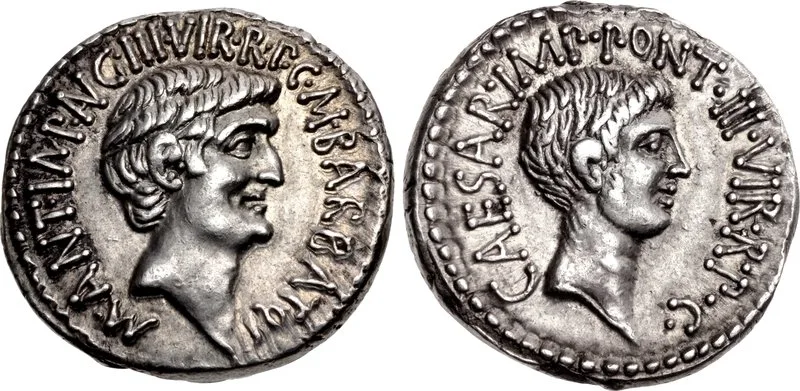
Denarius vs sestertius vs as: metal, size and weight
Metal and dimensions are clues, not a complete identification. The early imperial denarius is a relatively small silver coin. The sestertius is a much larger brass coin, while the as is copper. Corrosion can conceal the original colour; a brown surface does not identify the alloy. [1]
For a securely documented example, a Tiberius denarius in the British Museum (1973,0822.317) is 18 mm and 3.55 g. This is the measurement of one surviving coin, not a fixed standard for every denarius. The Augustan theoretical standard was about 3.9 g; Nero reduced it to about 3.4 g in AD 64. Wear, clipping, production variation and later debasement matter. [3, 4]
Record the maximum diameter in millimetres and weight in grams. Then compare coins of the same ruler, denomination and issue. Do not reject or authenticate a coin using weight alone. Our free Coin Size Gauge helps with scale, but a photograph cannot replace a balance.
The third century: the antoninianus
Caracalla introduced the coin collectors call the antoninianus in AD 214 or 215. It is generally understood as a double denarius, yet its weight was only about one and a half times that of a denarius. The radiate crown on male imperial portraits is a useful clue. [1]
Its silver content fell sharply during the third century. An early silver-looking antoninianus and a later base-metal issue do not represent a stable bullion standard. By the 240s the denomination had largely displaced the denarius. Do not use the early imperial table as a late-third-century exchange-rate chart. [1]
Diocletian and Constantine: follis, solidus and siliqua
Diocletian introduced a new high-purity silver argenteus and a large copper-alloy coin with some silver, often called a follis. NGC prefers nummus for that latter issue. The familiar names in catalogues are not always securely attested ancient denomination names. [1]
Constantine introduced the gold solidus, struck at 72 to the Roman pound. The aureus was replaced, rather than simply renamed. The siliqua was a later silver denomination whose weight also changed. Values between late bronze and precious-metal coins are often uncertain: it would be misleading to attach a permanent number of early imperial asses to them. [1]
Late Roman bronzes: AE1, AE2, AE3 and AE4 by size
These are modern size groups, not four securely known ancient face values. AE refers to copper and its alloys. A common convention is: [2]
| Group | Approximate diameter |
|---|---|
| AE1 | Over 25 mm |
| AE2 | 21–25 mm |
| AE3 | 17–21 mm |
| AE4 | Under 17 mm |
Boundaries are conventional and adjacent ranges meet. A small or irregular flan can sit outside the usual range of its type. An “AE23” normally means a base-metal coin about 23 mm wide, not a twenty-third denomination.
Download the one-page cheat sheet (PDF)
This HTML guide is the full explanation. The PDF remains a free printable quick reference, with no signup required. Use the chronological cautions in this guide when comparing different periods.
What does a denarius mean in modern money?
The ancient exchange ratio is not a modern dollar value. For metal value, wages, biblical references and dated auction examples, read What Is a Denarius Worth Today?
FAQ
How many sesterces were in a denarius?
Four sestertii equalled one denarius in the early imperial system. That denarius was also worth sixteen asses.
Was an antoninianus worth two denarii?
It is generally understood as a double denarius, although its weight at introduction was only about one and a half times that of a denarius.
Are AE1 to AE4 ancient denomination names?
No. They are modern size categories for late Roman base-metal coins, not four securely known ancient face values.
Sources and notes
Bracketed numbers refer to the sources below. The text is original; object measurements refer to the specified specimens.