There is no single denarius-to-dollar exchange rate. Silver content, ancient buying power and the price of a collectible coin answer three different questions. A biblical wage is not a modern price quotation.
What a denarius was: silver, weight, Augustus to Nero
The Roman silver denarius was introduced around 211 BC. In the early imperial system one denarius equalled four sestertii or sixteen asses. Under Augustus its theoretical weight was about 3.9 g; Nero reduced the standard to about 3.4 g in AD 64. Purity and weight changed again under later emperors. [1, 2]
A surviving Tiberius example in the British Museum weighs 3.55 g and is 18 mm wide. A measured object is more useful than the claim that every denarius contained exactly the same amount of silver. [3] For the full system, use our Roman coin denominations chart.
A day’s wage: the denarius in Matthew 20
In Matthew 20:1–16 the vineyard owner agrees to pay a denarius for a day’s work. The parable makes the amount intelligible to its audience, but it is not a universal Roman pay scale. Season, work, location, payments in kind and employment conditions differed. [4]
Calling a denarius “one day’s wage” conveys the story’s scale. It does not prove that the coin equals eight hours at a modern minimum wage, or that every soldier and farm worker earned the same daily amount.
Three ways to compare it today: silver, wages and bread
Silver value
The calculation is weight × silver fineness × current silver price per gram. If the price is per troy ounce, divide it by 31.1035 first. The fineness must belong to that issue, not to an assumed “Roman silver” standard. This is a metal-content calculation only: it does not set an ancient coin’s sale price. We do not publish a live silver quote or a fixed dollar conversion here.
Wage equivalent
A comparison with a present-day labourer’s daily pay can illustrate an order of magnitude, but only after choosing a country, date, job and gross or net pay. It measures labour, not metal. Matthew’s agreed wage is a starting point for discussion, not a currency peg. [4]
Bread and purchasing power
A basket of essentials is more meaningful than a single modern dollar figure. Yet loaf size, grain prices, subsidies and local scarcity all matter. Revelation 6:6 depicts a denarius buying a measure of wheat in a scene of scarcity, not an ordinary Roman bakery price list. [5] There is no defensible universal answer such as “one denarius = $X today”.
The tribute penny and other coins in the Gospels
Matthew 22:15–22 explicitly identifies the tax coin as a denarius. The expression “tribute penny” comes from older English translation, not from a British penny being present in Judaea. A Tiberius denarius with a seated female reverse is the traditional identification; the passage itself does not specify that reverse or a catalogue number. [4, 6]
The small coins in the widow’s offering (Mark 12:41–44) are lepta, not denarii. Nor does the Gospel account identify Judas’s thirty pieces of silver as thirty denarii (Matthew 26:15). Distinguishing the denomination is more reliable than attaching the same modern value to every biblical coin. [5]
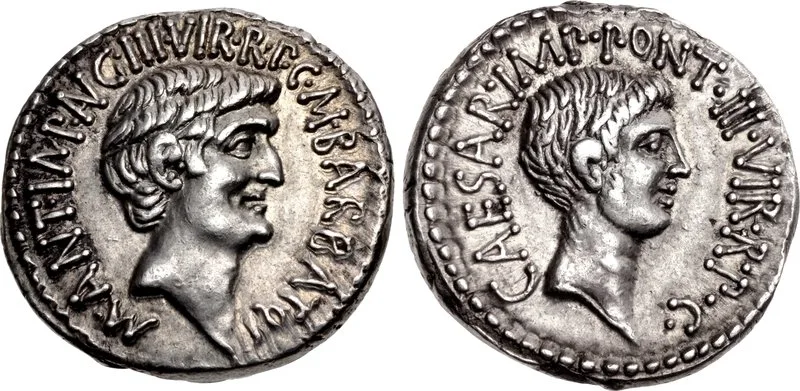
What a real denarius sells for today
Dated evidence, not a price list. The following are two observed hammer-price bands from four Septimius Severus denarii in CNG Feature Auction 133, Session 6, on 24 September 2026. All amounts are US dollars, excluding buyer’s fee, tax and shipping. Checked 5 November 2026. This small sample is not representative of all denarii and supplies neither a minimum nor a maximum for the market. [7–10]
| Observed band (USD) | Documented examples |
|---|---|
| $200–225 | Lot 6239: $200, VICT PART MAX, NGC Ch AU, brushed. Lot 6237: $225, VIRT AVGG, Near EF. |
| $550–750 | Lot 6234: $550, LEG XIIII GEM M V, VF. Lot 6236: $750, RESTITVTOR VRBIS, NGC AU. |
Condition descriptions are CNG’s own. These lots carried a 22.5% buyer’s fee for bids on CNG’s website and 25% for other channels: a $200 hammer became $245 with the 22.5% fee alone, before tax and shipping. No undocumented currency conversion is applied.
What determines the price?
Identify the exact type before comparing prices. Ruler, mint, reverse, rarity of the issue, preservation, strike, centring, surface quality, eye appeal and documented provenance can all matter. A hole, harsh cleaning, tooling, corrosion or doubts about authenticity change the comparison. A familiar emperor does not guarantee a common reverse.
The four examples above show why grade alone is insufficient: the VF legionary coin sold above the brushed Ch AU coin. This does not prove a universal premium for a type; it demonstrates that individual results cannot be reduced to one grade scale. For a real valuation, compare multiple recent sales of the same type and ask an established specialist. Preserve purchase records and lawful provenance.
Found a coin? UK and Italy rules
First: do not clean, polish, sell or continue digging around a possible archaeological find. Record where it was found without disturbing the context, and contact the competent authority. The notes below concern new finds, not every coin already held lawfully in a collection.
England and Wales
Report potential treasure through the official route within 14 days of finding it or realising that it might be treasure. A single Roman coin should not automatically be declared exempt: ask a Finds Liaison Officer, especially if other objects or coins were associated. Non-treasure finds of historical interest can be recorded through PAS in England and Cymru PAS in Wales. Landowner permission and restrictions on protected sites still apply. [11]
Scotland and Northern Ireland
Do not apply the England-and-Wales rules across the whole UK. In Scotland contact the Treasure Trove Unit at National Museums Scotland. In Northern Ireland an archaeological object must be reported within 14 days to NMNI, the Historic Environment Division or police; additional treasure procedures may apply. [12, 13]
Italy
Archaeological objects found in the Italian subsoil or seabed belong to the State under article 91 of Legislative Decree 42/2004, including finds on private land. Article 90 requires a chance find to be reported within 24 hours to the Soprintendenza, mayor or public-security authority. Keep it in its original condition and place; removal is allowed only where necessary for safe custody until the authority visits. Searching deliberately for archaeology is not transformed into a lawful chance find by using a metal detector. Do not assume that finding a Roman coin gives you ownership or a right to sell it. [14]
These are practical signposts, not legal advice. Contact the responsible authority for the actual place and circumstances.
Download the one-page cheat sheet (PDF)
This HTML guide is the full explanation. The PDF remains a free printable quick reference, with no signup required. Use the chronological cautions in this guide when comparing different periods.
FAQ
Is a denarius worth a day’s wages?
Matthew 20 describes an agreed payment of one denarius for a day in a vineyard. It is not a universal Roman wage or a fixed conversion to modern pay.
What is the plural of denarius?
The Latin plural is denarii. In Italian the coin is called a denario, plural denari.
Is a denarius the same as a drachma?
No. They belong to different coinage traditions. Their weights, standards and exchange relationships depend on time and place.
Can I sell a Roman coin I have just found in Italy?
Do not assume ownership. Archaeological objects found in the subsoil or seabed belong to the State; a chance find must be reported within 24 hours under articles 90 and 91 of Legislative Decree 42/2004.
Sources and notes
Bracketed numbers refer to the sources below. The text is original; object measurements refer to the specified specimens.
- Wikipedia: Denarius; references include Crawford, Harl and Melville Jones
- NGC Ancients: Coin Denominations of the Roman Empire (2011)
- British Museum: Tiberius denarius, 1973,0822.317
- Matthew 20:1–16 and 22:15–22, NRSVUE (Bible Gateway)
- Revelation 6:6; Mark 12:41–44; Matthew 26:15 (Bible Gateway)
- Wikipedia: Denarius, biblical use and the traditional tribute-penny identification
- CNG 133, Session 6, lot 6239, 24 September 2026: $200 hammer
- CNG 133, Session 6, lot 6237, 24 September 2026: $225 hammer
- CNG 133, Session 6, lot 6234, 24 September 2026: $550 hammer
- CNG 133, Session 6, lot 6236, 24 September 2026: $750 hammer
- GOV.UK: Report treasure (England and Wales; separate jurisdictions noted)
- Treasure Trove Unit, National Museums Scotland
- nidirect: Archaeology and treasure (Northern Ireland)
- Ministero della Cultura, SABAP Umbria: Ritrovamenti fortuiti; D.Lgs. 42/2004, artt. 88–93