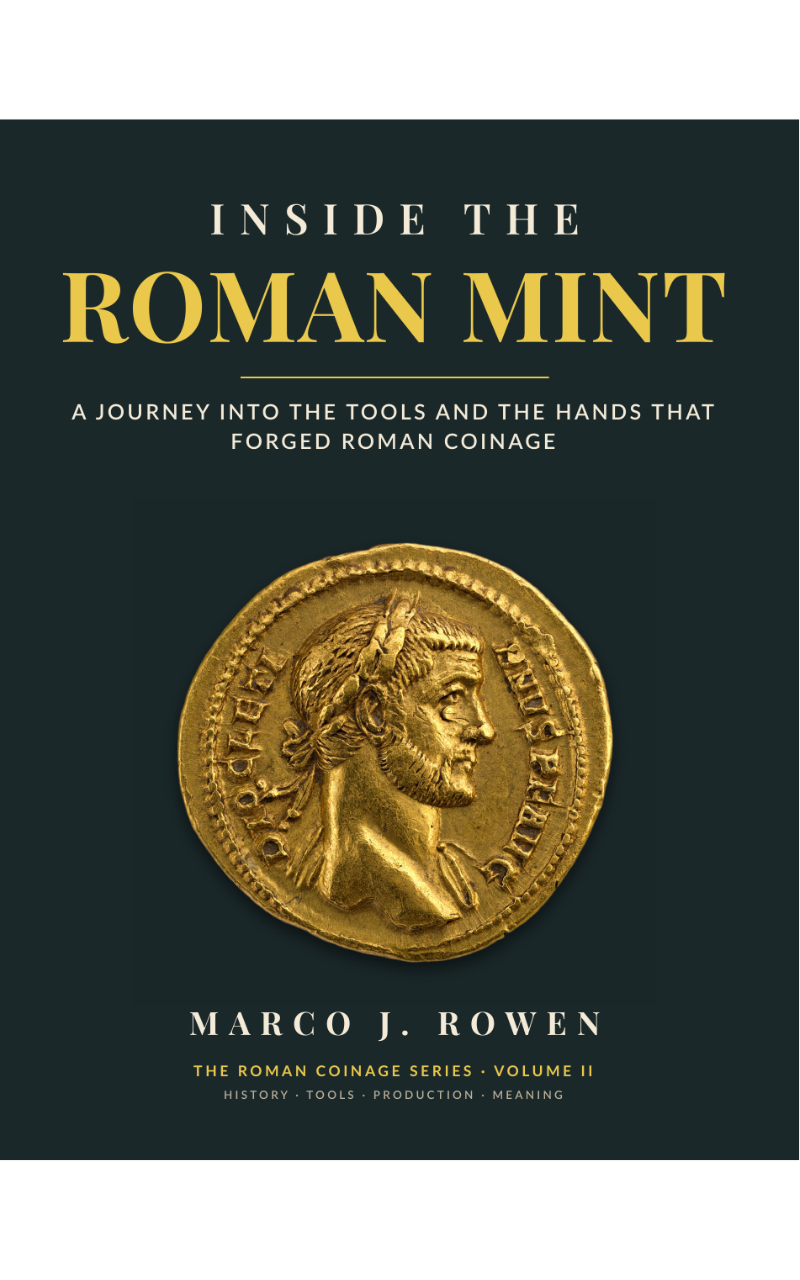
INSIDE THE ROMAN MINT: A Journey into the Tools, the Fire and the Hands That Forged Roman Coinage - Volume II
Marco J. Rowen“Inside the Roman Mint” by Marco J. Rowen reveals, for the first time in vivid narrative form, the actual physical process of Roman coin production: not symbols or legends, but furnaces, dies, hammer blows, human workers, accidents, and operational decisions that shaped every coin. Grounded in tangible archaeological and numismatic evidence, the book reconstructs the workshop layout, professional roles, flan preparation, die-alignment dynamics, the meaning of errors and imperfections, quality-control systems, and even the coin’s first journey out of the mint. It is neither a technical manual nor a typological catalog; rather, it is a clear, immersive, and historically grounded guide to the real mechanics of Roman minting, equally valuable for collectors and scholars, and fully self-contained, requiring no prior reading.