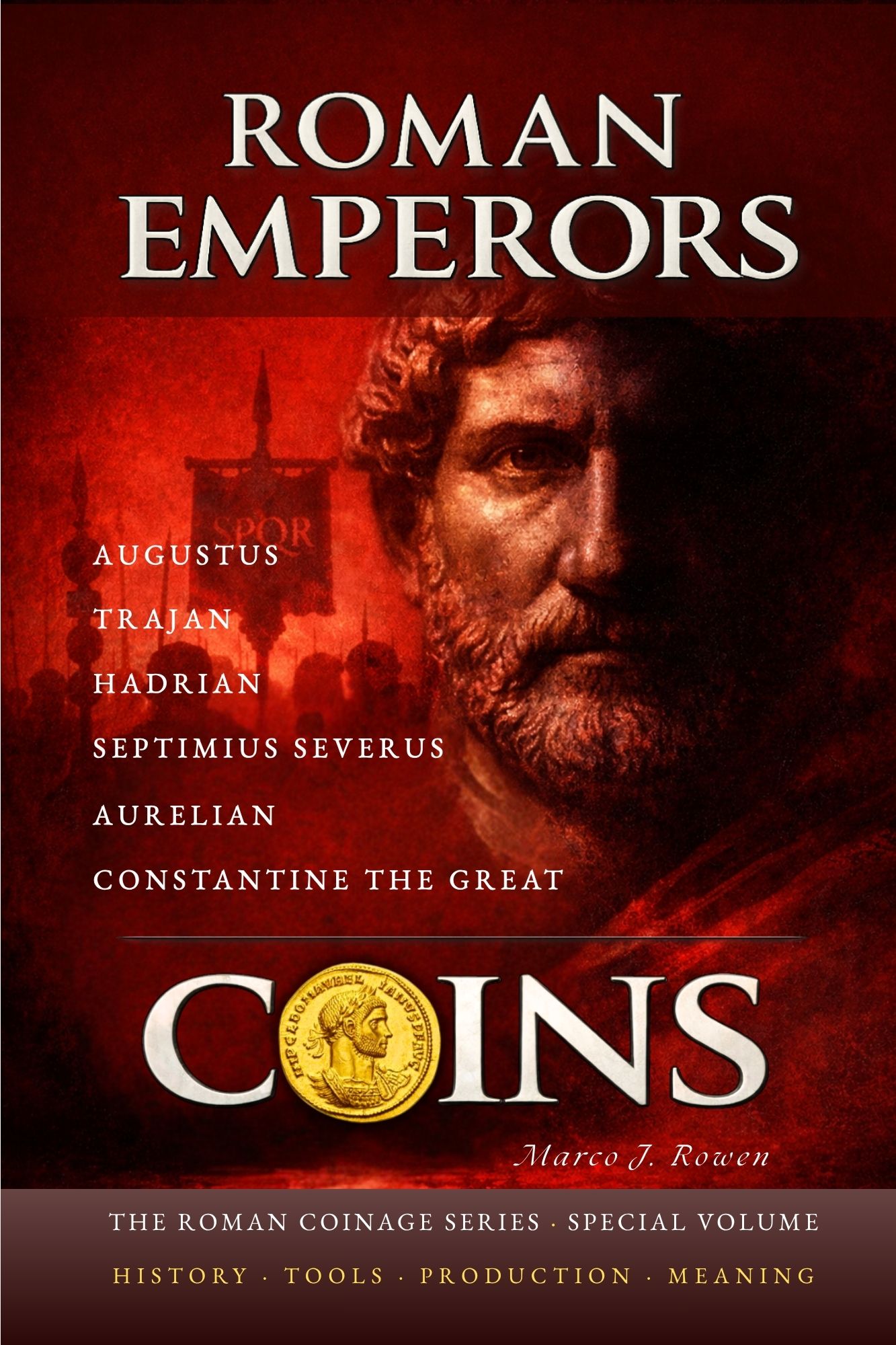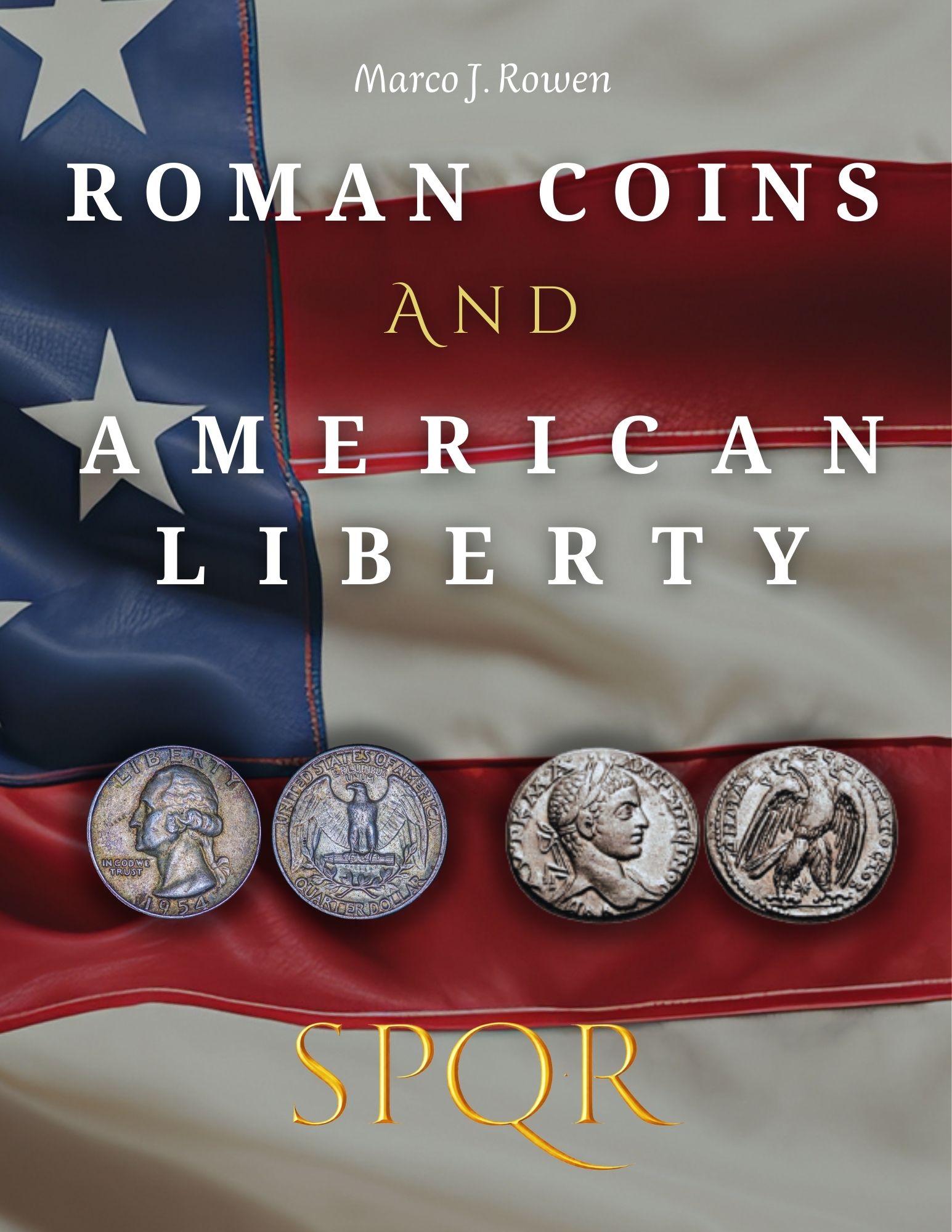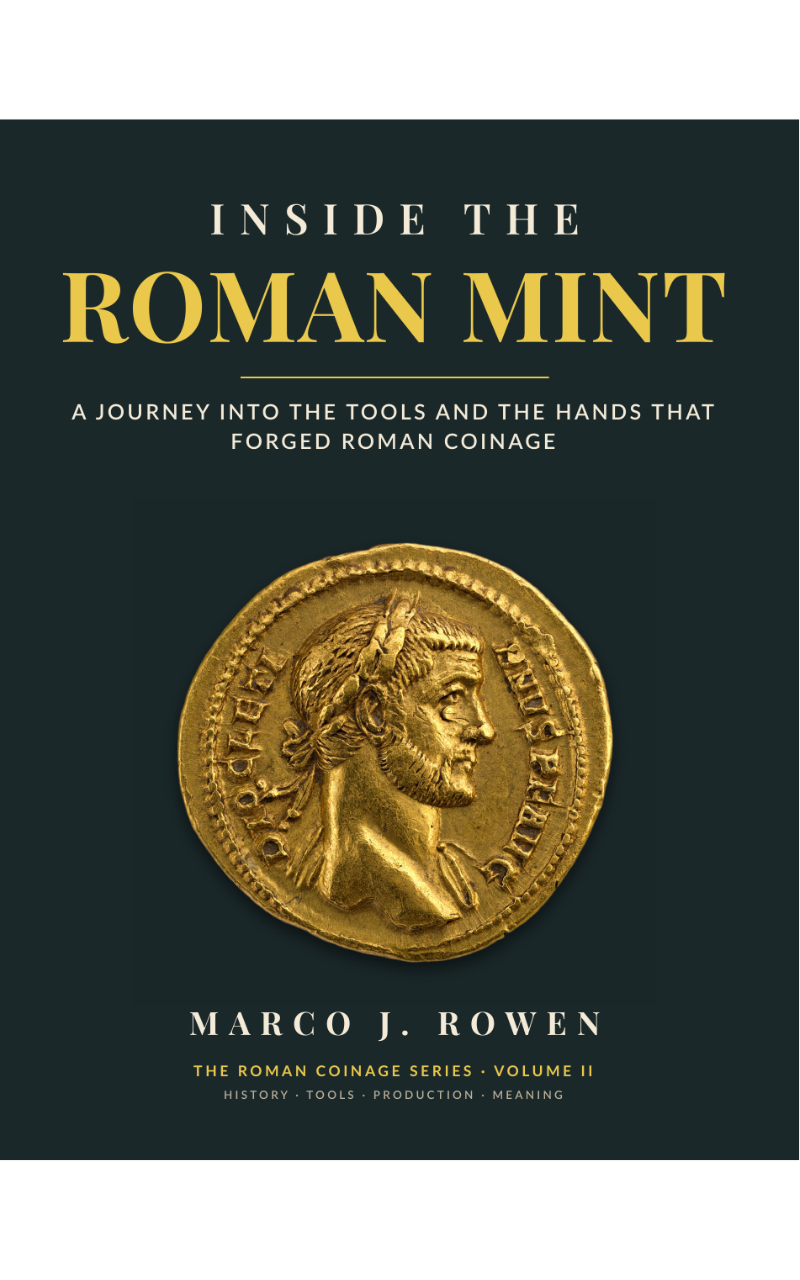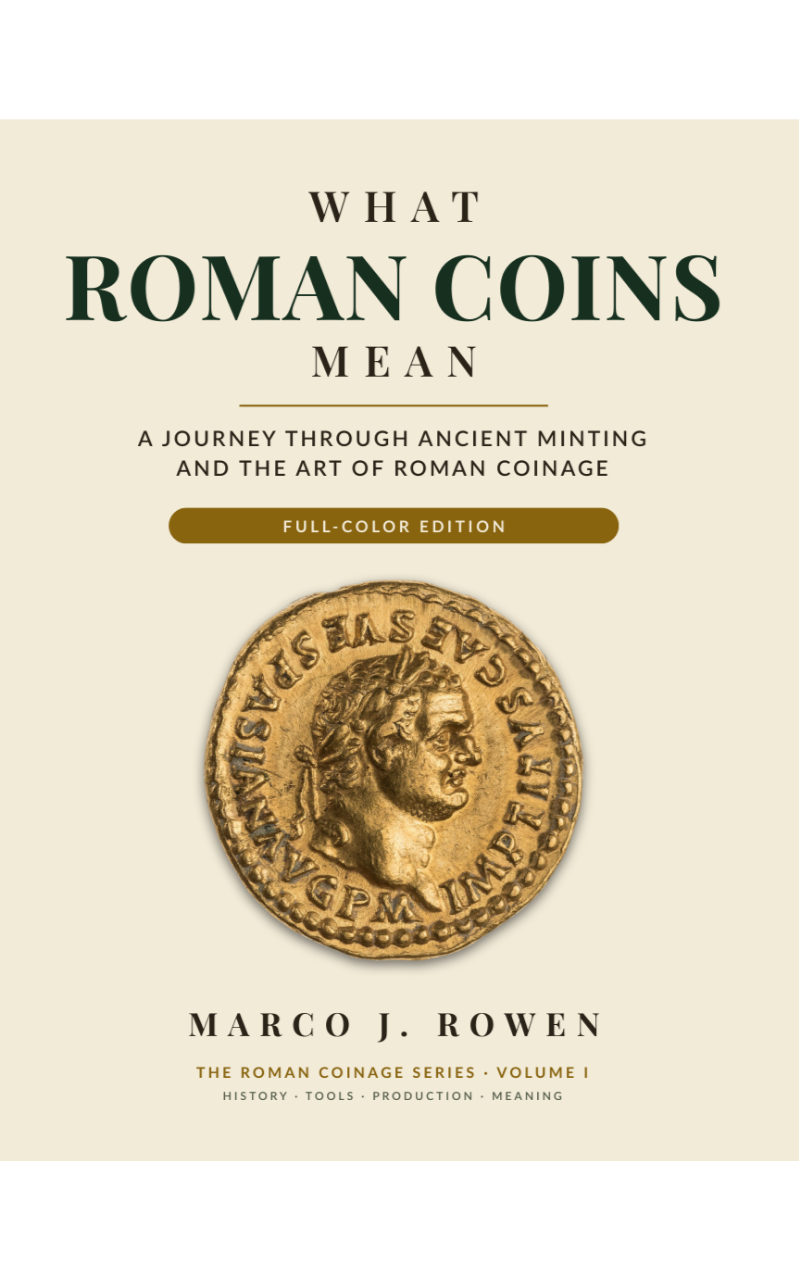
WHAT ROMAN COINS MEAN: A Journey Through Ancient Minting and the Art of Roman Coinage - Volume I
Marco J. RowenWhat Roman Coins Mean is not a catalog of emperors or a guide to collecting. It is a material history written in bronze, silver, and gold, one coin at a time. Marco J. Rowen traces the full life cycle of Roman coinage as tangible objects embedded in daily practice: how metal was smelted in provincial furnaces; how blanks were cut, heated, and struck with hammers by workers whose hands bore calluses, not titles; how coins moved along roads, rivers, and trade routes, not as abstract value, but as weight, edge, and wear. The book treats each coin as a stratified artifact: its surface carries microscopic traces of circulation, scratches from pouches, smoothing from palm friction, corrosion from soil chemistry, and patina built over centuries. Rowen examines ancient counterfeiting not as fraud, but as evidence of demand, skill transfer, and local economic adaptation, showing how imitations were made with regional alloys, improvised dies, and variable striking force. Conservation is approached not as restoration, but as forensic restraint: when and why a conservator chooses not to clean, how XRF and micro-CT reveal hidden casting seams or internal voids, how digital photogrammetry reconstructs worn legends letter by letter. The analysis never detaches from the object: no coin is discussed without reference to its actual thickness, alloy composition, die axis orientation, or the direction of metal flow under impact. This is archaeology of the everyday, where a clipped edge speaks of scarcity, a double-struck obverse reveals workshop haste, and a single fingerprint preserved in clay from a mold tells us more than any inscription. Rowen’s method is tactile, empirical, and resolutely anti-hermeneutic: meaning emerges not from reading symbols, but from measuring wear patterns, mapping corrosion zones, comparing die-link clusters across excavation contexts, and reconstructing production rhythms from workshop debris.